
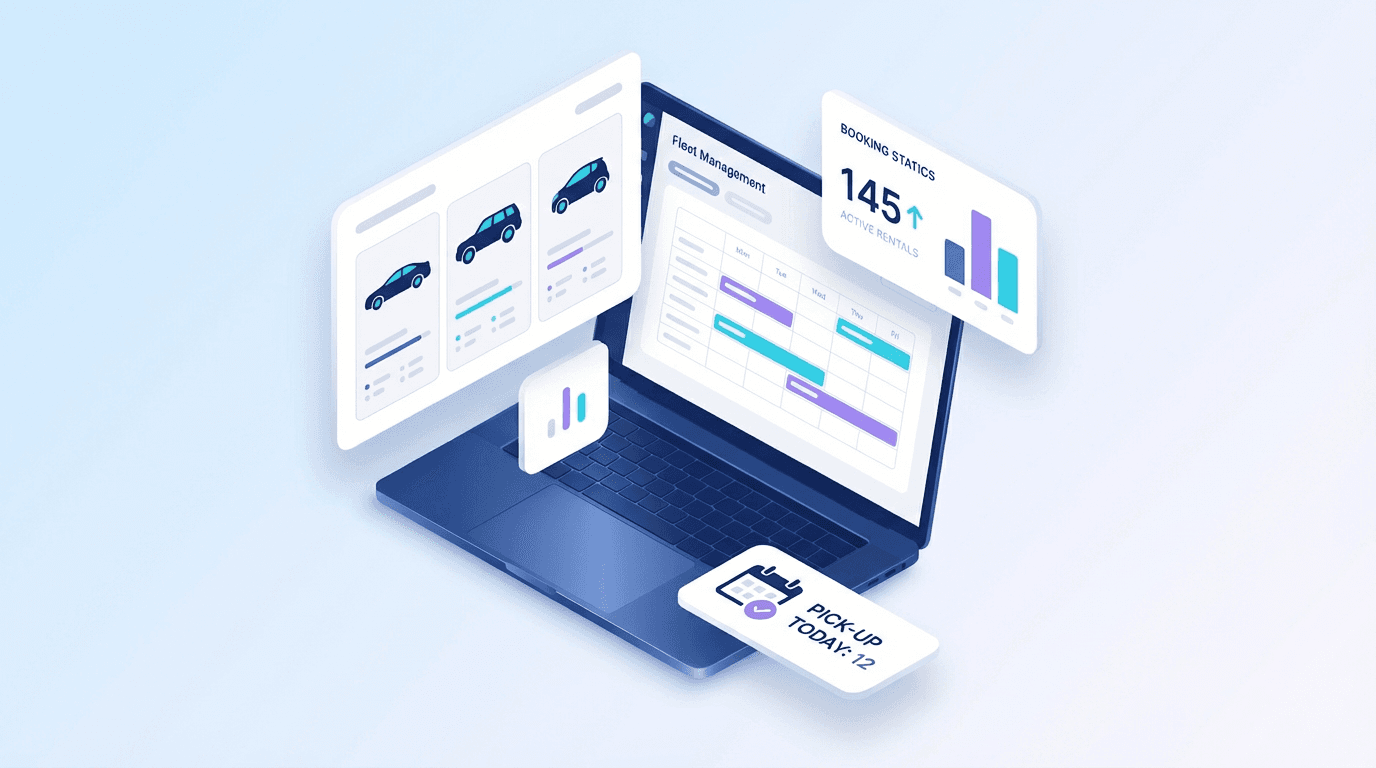
Quick answer: Rental software transforms businesses by automating bookings, eliminating double-booking errors, enabling 24/7 online reservations, providing real-time fleet analytics, generating contracts instantly, processing payments automatically, and reducing admin time by up to 80%. Companies using dedicated rental software report 25-40% higher fleet utilization and significant revenue growth.
Managing rental properties in 2026 means juggling tenant communications, maintenance requests, payment processing, lease agreements, and compliance requirements—often across multiple properties. Property managers and real estate investors lose countless hours to manual processes that modern rental software can automate in seconds.
Whether you're overseeing a portfolio of vacation rentals or managing long-term residential properties, the right rental management platform eliminates administrative bottlenecks, reduces costly errors, and creates exceptional tenant experiences. This comprehensive guide explores how rental software transforms business operations, which features matter most, and how to choose the perfect solution for your specific needs.
What is Rental Software?
Rental software is a cloud-based platform designed to streamline every aspect of running a rental business—from tenant screening and lease agreements to payment processing and maintenance tracking. Modern rental management systems centralize operations in one intuitive dashboard, replacing spreadsheets, paper files, and disconnected tools.
These platforms serve diverse rental business models including residential property management, vacation rentals, equipment rentals, and commercial real estate. The best solutions offer flexible configurations that adapt to your specific workflow while automating repetitive tasks that consume valuable time.
At its core, rental software functions as your digital operations hub. Property managers can screen applicants, collect rent, schedule maintenance, communicate with tenants, and generate financial reports—all from a single user interface. This integration eliminates data silos and provides real-time visibility into portfolio performance.
For property managers and real estate investors, rental software delivers comprehensive capabilities far beyond simple spreadsheets.
The benefits of using rental software transform every aspect of operations through automation, financial accuracy, tenant satisfaction, and scalability.
For car rental businesses specifically, learn about the 10 must-have software features, see the financial ROI of switching from spreadsheets, or compare today's leading solutions to find the right fit. Discover how mobile app trends are reshaping the customer experience, and explore how demand forecasting helps operators maximize fleet revenue. For strategies on growing your customer base, see our car rental marketing ROI guide.