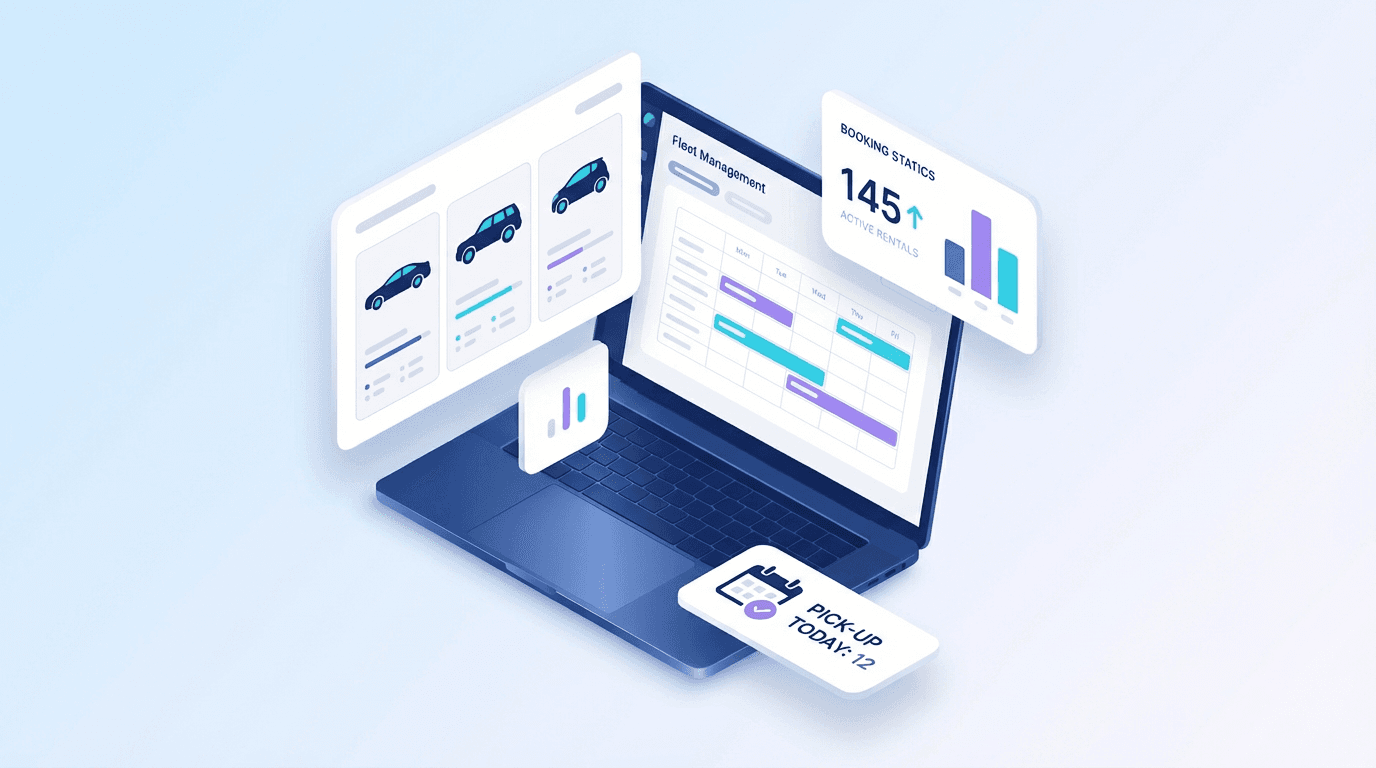
7 Ways Car Rental Management Software Boosts Profits in 2026
Discover how car rental management software increases profitability through automation, better fleet utilization, and enhanced customer experience. Complete 2026 guide for rental businesses.
Quick answer: Car rental management software boosts profits through: (1) maximizing fleet utilization with real-time tracking, (2) capturing 24/7 online bookings, (3) eliminating revenue-draining double bookings, (4) reducing admin costs by 80%, (5) enabling dynamic pricing strategies, (6) automating contract and payment workflows, and (7) providing data-driven insights for smarter decisions. Rental companies report 25-40% higher fleet utilization and up to 35% revenue growth after implementation.
The car rental industry faces mounting pressure from rising operational costs, increased competition, and evolving customer expectations. Manual processes that once worked for small fleets now create bottlenecks, compliance headaches, and missed revenue opportunities. According to recent industry data, car rental businesses using modern management software report 25-40% improvements in fleet utilization and significant reductions in administrative overhead.
This comprehensive guide explores seven proven ways that car rental management software transforms operations and drives profitability in 2026. Whether you're managing a boutique rental operation with 10 vehicles or a multi-location enterprise with hundreds of cars, you'll discover how the right technology stack optimizes every aspect of your business—from reservation systems to customer management, reporting and analytics to payment processing.
What is Car Rental Management Software?
Car rental management software is a specialized platform designed to automate and streamline all operational aspects of a vehicle rental business. Modern car rental software consolidates booking engines, fleet management, customer management, payment processing, and reporting and analytics into a unified system accessible from any device.
Core Components of Comprehensive Solutions
Today's leading platforms integrate multiple critical functions:
Reservation system: The foundation of any car rental software, enabling online and offline bookings, availability management, and rate optimization across channels.
Fleet management: Real-time vehicle tracking, maintenance scheduling, and utilization monitoring that keeps your assets productive and road-ready.
Customer management: Centralized profiles, rental history, preferences, and communication tools that enable personalized service and repeat business.
Payment processing: Secure transaction handling, multiple payment methods, deposits, and automated billing that reduces friction and accelerates cash flow.
Integration capabilities: Connections to accounting software, insurance providers, marketing platforms, and distribution channels that eliminate data silos.
The shift from fragmented tools to comprehensive platforms represents one of the most significant operational improvements available to rental businesses today. Rather than juggling spreadsheets, standalone booking systems, and manual processes, operators gain a single source of truth that powers better decision-making.
1. Automated Reservations Eliminate Double-Bookings and Maximize Occupancy
Lost revenue from double-bookings and manual scheduling errors costs rental businesses thousands annually. A robust reservation system transforms how you capture and manage bookings across all channels.
Real-Time Availability Across All Channels
Modern booking engines sync availability instantly across your website, phone reservations, walk-ins, and third-party distribution platforms. When a customer books a vehicle through any channel, the reservation system immediately updates availability everywhere, eliminating the chaos of overbooking or turning away customers when vehicles sit idle.
Multi-location support enables customers to pick up vehicles at one location and drop off at another, expanding your market reach without administrative complexity. The system automatically tracks vehicle location, transfers between branches, and optimizes fleet distribution based on demand patterns.
Dynamic Pricing Strategy Optimization
Advanced car rental software incorporates pricing strategy tools that automatically adjust rates based on seasonal demand fluctuations, local events driving temporary demand spikes, vehicle class availability and popularity, competitor pricing data, booking lead time and duration, and customer segment and loyalty status. For an in-depth look at how modern analytics drive these strategies, see our demand forecasting and dynamic pricing guide.
This dynamic approach, similar to airline revenue management, can increase average rental rates by 15-30% during peak periods while maintaining competitive pricing during slower periods to maximize overall fleet utilization.
A rental company near a major convention center implemented automated pricing rules that increased rates 35% during confirmed convention dates while offering promotional pricing during identified low-demand periods, resulting in 23% revenue growth without fleet expansion.
2. Intelligent Fleet Management Reduces Costs and Extends Vehicle Lifespan
Vehicle tracking and proactive fleet management capabilities separate profitable operations from those struggling with unexpected breakdowns, inefficient asset utilization, and premature vehicle replacement costs.
Predictive Maintenance Scheduling
Rather than reactive repairs that sideline revenue-generating assets, modern fleet management systems track mileage, engine hours, and service intervals for every vehicle. Automated alerts ensure timely oil changes, tire rotations, inspections, and scheduled maintenance, preventing costly breakdowns and extending vehicle lifespan.
Insurance management integration ensures continuous coverage, automatic certificate generation for customers, and claims tracking that reduces administrative burden while protecting your assets.
Data-Driven Fleet Composition Decisions
Reporting and analytics tools reveal which vehicle classes generate the highest margins, longest rental durations, and strongest customer demand. This intelligence guides fleet acquisition and disposal decisions, helping you invest capital in vehicles that maximize return rather than those that sit idle.
Vehicle tracking capabilities also identify utilization patterns across locations, enabling strategic redistribution of assets to match demand. A sedan sitting unused at your airport location might be in high demand at your downtown office—automated alerts help fleet managers rebalance inventory proactively.
A regional rental company with 150 vehicles used fleet analytics to identify that luxury vehicles at secondary locations had 40% lower utilization than economy cars. Rebalancing their fleet composition and redistribution increased overall utilization from 68% to 84%, equivalent to adding 24 vehicles without purchasing a single additional car.
3. Streamlined Customer Management Drives Repeat Business and Referrals
Acquiring new customers costs 5-7 times more than retaining existing ones, yet many rental businesses lack systems to capitalize on customer relationships. Comprehensive customer management transforms one-time renters into loyal repeat customers.
Centralized Customer Profiles and History
Modern car rental software maintains detailed profiles including rental history, vehicle preferences, payment methods, driver's license verification, and communication preferences. This enables personalized service where front desk staff see customer preferences and can anticipate needs, faster repeat rentals where returning customers complete bookings in 60 seconds rather than re-entering information, and targeted marketing by segmenting customers by rental frequency, vehicle preferences, or lifetime value.
Automated Communication and Follow-Up
Integrated email and SMS capabilities automate confirmation messages, pickup reminders, return instructions, and post-rental surveys without manual effort. This consistent communication reduces no-shows, improves customer experience, and generates reviews that build your reputation.
Mobile app integration extends your customer management capabilities by allowing renters to manage bookings, access digital keys, request roadside assistance, and extend rentals—all from their smartphones, reducing call volume to your office.
4. Integrated Payment Processing Accelerates Cash Flow and Reduces Fraud
Payment processing represents both a critical revenue function and a significant risk area for rental businesses. Modern car rental management software addresses both dimensions with sophisticated financial tools.
Multiple Payment Methods and Automated Collections
Today's customers expect payment flexibility—credit cards, debit cards, digital wallets, and business accounts. Integrated payment processing supports all common methods while automating deposit collection at booking, balance settlement at pickup or return, additional charges for fuel, damage, or extensions, refund processing for cancellations, and failed payment retry logic and dunning.
This automation eliminates manual invoice generation, payment tracking, and collection follow-up that consumes staff time and delays cash flow.
Fraud Prevention and Security Measures
Sophisticated car rental software incorporates multiple security measures to protect your business. Payment verification includes real-time credit card validation, address verification, and fraud scoring to reduce chargebacks and fraudulent rentals. Damage documentation with photo capture at pickup and return with timestamp and location creates indisputable evidence for damage claims. Driver's license scanning ensures automated verification that renters meet age and licensing requirements while capturing information for compliance and insurance purposes.
Integration capabilities with accounting platforms like QuickBooks or Xero automatically sync transactions, eliminating double-entry and ensuring accurate financial records without additional administrative work.
The 42-Point Car Rental Operations Checklist
The exact checks profitable rental operators run every week — free, straight to your inbox.
Fleet readiness & handover
Bookings & no-show prevention
Pricing & revenue reviews
Contracts & compliance
Payments & invoicing
Maintenance & fleet health
One email with the checklist. No spam, unsubscribe anytime.
5. Comprehensive Reporting and Analytics Reveal Hidden Profit Opportunities
Data-driven decisions separate growing rental businesses from those relying on intuition and guesswork. Advanced reporting and analytics transform operational data into actionable intelligence.
Revenue Optimization Dashboards
Modern car rental software provides real-time visibility into fleet utilization rates by location, vehicle class, and time period, revenue per vehicle identifying your most profitable assets, booking source performance showing which marketing channels deliver the best ROI, customer acquisition costs and lifetime value by segment, and pricing effectiveness comparing actual rates to market potential.
These insights reveal opportunities to adjust fleet mix, reallocate marketing budgets, or modify pricing strategy to maximize profitability.
Operational Efficiency Metrics
Beyond revenue analytics, comprehensive platforms track operational KPIs including average turnaround time between rentals, staff productivity and booking velocity, maintenance costs per vehicle, customer satisfaction scores, and no-show and cancellation rates.
Identifying operational bottlenecks allows targeted process improvements that reduce costs without compromising service quality.
Analytics revealed that one company's downtown location had 90-minute average turnaround times versus 45 minutes at other branches. Investigation showed inadequate staffing during peak return periods. Adjusting schedules reduced turnaround time, enabling 12% more rentals per vehicle annually.
6. Mobile App Capabilities Meet Modern Customer Expectations
Customers accustomed to managing their lives from smartphones expect rental businesses to offer the same convenience. Mobile app integration capabilities separate forward-thinking operators from those losing business to more tech-savvy competitors.
Self-Service Booking and Management
Mobile-optimized booking engines enable customers to browse available vehicles with photos and detailed specifications, compare pricing across dates and vehicle classes, complete reservations in minutes from anywhere, modify bookings without calling your office, and access digital rental agreements and insurance information.
This 24/7 self-service capability captures bookings that might otherwise go to competitors and reduces call volume to your reservation desk. For the latest data on how mobile is transforming car rental, see our mobile app trends guide for 2026.
Contactless Pickup and Return
Advanced mobile app features enable completely contactless rental experiences including digital driver's license verification, remote vehicle unlocking via smartphone, pre-rental vehicle inspection with photo documentation, digital key access without physical interaction, and push notifications for pickup readiness and return instructions.
These capabilities proved essential during pandemic restrictions and remain valuable for customers prioritizing convenience and efficiency.
7. Multi-Location Support Enables Profitable Scaling
Growing beyond a single location introduces operational complexity that overwhelms businesses relying on manual processes. Comprehensive multi-location support in modern car rental software enables profitable geographic expansion.
Centralized Operations with Local Flexibility
Effective platforms balance standardization with local autonomy. Corporate visibility allows executives to see consolidated performance across all locations with drill-down capabilities to identify issues and opportunities. Location flexibility enables branch managers to adjust local pricing, manage their fleet, and serve customers without navigating corporate bureaucracy. Automated transfers track when customers need one-way rentals or fleet rebalancing requires vehicle movement between locations.
Franchise and Partnership Management
For rental businesses operating franchise models or partnerships with hotels, dealerships, or other businesses, sophisticated car rental management software supports commission tracking and automated partner payouts, branded white-label booking engines for partners, restricted access levels maintaining data security, and consolidated reporting across corporate and franchise locations.
This capability transforms complex partnership arrangements from administrative nightmares into profitable growth channels.
Choosing the Right Car Rental Management Software for Your Business
With dozens of vendors offering seemingly similar capabilities, selection requires structured evaluation.
Assess Your Specific Requirements
Start by documenting business size and growth plans including current fleet size, location count, and 3-year expansion projections. Identify operational priorities and which pain points cause the most significant problems or missed revenue. Understand integration needs with what existing systems must connect with your new platform. Finally, establish budget constraints including total budget for software subscriptions, implementation fees, hardware, and training time.
Evaluate Vendor Capabilities
Request demonstrations focused on your specific requirements. Assess feature completeness to determine if the platform handles all essential functions or requires additional tools creating complexity. Evaluate user interface quality to see if your staff will adopt it easily. Review customer support quality by reading reviews about vendor responsiveness, technical support availability, and problem resolution.
Prioritize Scalability and Flexibility
Your business will evolve. Choose car rental software that grows with you by adding locations without platform limitations or cost penalties, expanding fleet size without performance degradation, incorporating new vehicle types like electric, luxury, or specialty vehicles, integrating emerging technologies as they mature, and customizing workflows to match your specific processes.
Conclusion: Investing in Technology for Sustainable Competitive Advantage
The car rental industry has evolved beyond the point where manual processes and fragmented tools can compete effectively. Modern car rental management software represents not merely a convenience but a fundamental requirement for operational excellence and profitable growth in 2026.
The seven profit-boosting capabilities explored in this guide—automated reservations, intelligent fleet management, streamlined customer relationships, integrated payment processing, comprehensive analytics, mobile capabilities, and multi-location support—together transform every aspect of how rental businesses operate.
Forward-thinking operators recognize that technology investment isn't an expense but rather a strategic advantage that compounds over time. Better fleet utilization, higher customer retention, optimized pricing, reduced administrative overhead, and data-driven decision-making create sustainable competitive advantages that manual competitors cannot match.
Whether you're managing 10 vehicles or 1,000, the right car rental software platform positions your business for profitable growth while improving service quality and operational efficiency. The question is no longer whether to invest in comprehensive technology but rather which platform best fits your specific requirements, growth trajectory, and budget.