Preventive Maintenance for Rental Cars Starts at the Counter
The pickup and return inspection is where most preventable damage claims and safety incidents get caught, or missed. A turn check should take between three and five minutes, and skipping it to save time is the single most common way rental operators end up renting out a car with a warning light already on.
Run through the same sequence every time:
- Test all exterior and interior lights, including brake lights and turn signals.
- Check tire pressure and tread depth on all four tires, plus the spare if one exists.
- Walk the exterior for new scratches, dents, or glass chips, comparing against the last return record.
- Confirm no dashboard warning lights are active, especially oil pressure, coolant temperature, and check-engine indicators.
- Inspect the windshield for cracks and test both wipers and washer fluid.
- Check mirrors for damage and confirm the horn works.
Document odometer reading, fuel level, and any flagged issues with timestamped photos, ideally through a mobile inspection form rather than a paper log that gets lost in a glove box. A digital record tied to the vehicle's file gives you a defensible history if a renter disputes damage later.
Pro Tip: Build the turn check into a hard control point in your workflow so a vehicle physically cannot move back into available inventory until the inspection form is submitted and passed. This one rule closes the biggest loophole in most small fleets: the "check it later" habit.
How Do You Set Preventive Maintenance Intervals for a Fleet?
Your owner's manual is the baseline, not a suggestion to improve on. Consumer Reports cautions that shop-recommended add-ons like frequent fluid flushes often exceed what the manufacturer actually requires, and rental fleets that let every shop upsell freely end up paying for services that add no real protection.
Build your program in three steps:
- Set multi-trigger rules. Define PM intervals by mileage, engine hours, and calendar time, whichever threshold arrives first, so a low-mileage car sitting on the lot still gets serviced on schedule.
- Create PM tiers. A simple PM-A (oil, filters, visual inspection), PM-B (brakes, tires, fluids, belts), and PM-C (major service items, timing components) structure keeps technicians and vendors working from the same playbook every time.
- Adjust for outliers. High-idle vehicles, airport shuttle runs, and low-mileage luxury units age differently than daily-driver sedans, and EVs need a separate interval logic entirely since they skip most oil-related service points but still need tire, brake, and battery-system checks.
A fleet maintenance program only works when the intervals live in one system tied to inspections and parts, not scattered across sticky notes and a mechanic's memory, a point FleetOpsClub's program-building guide makes directly.
Building an Inspection Routine That Catches Problems Early
Daily driver checks, weekly shop inspections, and monthly deep inspections each catch a different category of problem, and skipping any one of the three creates a gap.
Daily checks happen at every turn: lights, tires, fluids, visible damage. Weekly shop inspections go deeper, covering brake pad thickness, belt condition, and battery health on vehicles that were flagged during turns or that are approaching a PM interval. Monthly deep inspections cover the full vehicle, including undercarriage, suspension components, and anything a quick visual check would miss.
Require standardized digital fields for every inspection type, not free-text notes, so data stays comparable across vehicles and technicians:
- Odometer reading and fuel level
- Photo capture of tires, exterior panels, and interior condition
- Warning-light status
- Technician notes tied to a defect code, not a paragraph of prose
Route defects by severity. Safety-critical issues (brakes, steering, tire blowout risk) pull the vehicle from service immediately. Everything else gets a work order with a 24-hour resolution target. That routing rule alone prevents the slow drift where minor issues pile up until a vehicle needs a week in the shop instead of an hour.
Keeping Parts on the Shelf so PM Never Waits
Nothing kills a PM schedule faster than a technician ready to work and no oil filter on the shelf. Start your inventory with the consumables you burn through constantly:
- Oil and oil filters
- Air and cabin filters
- Brake pads and wiper blades
- Common fluids: coolant, brake fluid, washer fluid
Set reorder points based on actual consumption rates, not guesswork, and track parts usage by vehicle. A car burning through brake pads twice as fast as its peers is telling you something about how it's driven or where a deeper mechanical issue is hiding.
On the vendor side, negotiate turnaround SLAs in writing, spot-check work quality rather than assuming every invoice is accurate, and single-source only for specialty parts where switching suppliers would cost more in delay than it saves in price.
Pro Tip: Keep a second, smaller supplier relationship active even if you mostly single-source. When your primary vendor is backed up during a busy season, you need a fallback that already knows your account.
Telematics and Predictive Maintenance: When Do They Pay Off?
Preventive maintenance runs on a fixed schedule. Predictive maintenance reads live vehicle data, diagnostic trouble codes, engine hours, odometer sync, and battery voltage trends, to flag a failure before it happens. They're not competing systems; they solve different problems.
Telematics earns its cost fastest on high-cost failure modes: transmission issues, battery degradation in EVs and hybrids, and engine problems that are cheap to catch early and expensive to catch late. Routine consumables like oil, filters, and wipers stay on scheduled PM regardless, since there's no meaningful ROI in predicting when a wiper blade will wear out.
Predictive maintenance targeted at high-cost failure modes can reduce over-servicing and cut long-term costs by 25 to 30 percent compared with preventive-only programs, according to Alliance Fleet Solutions.
A practical rollout looks like this:
- Pilot telematics on your highest-utilization vehicles first, where downtime costs the most.
- Measure avoided downtime and repair costs against your pre-telematics baseline.
- Scale to the rest of the fleet only once the pilot shows a measurable return.
Small fleets don't need enterprise-grade predictive platforms to start. OEM-embedded telematics or a fractional monitoring service can deliver much of the early-warning value at a fraction of the upfront cost.
Scheduling Rules That Protect Your Rentable Days
The KPI that matters most to a rental operation is rentable days, the number of days a vehicle is actually available to earn revenue, not sitting in a bay waiting on a part or a technician.
- Stagger every PM appointment. Never let more than a small fraction of the fleet sit in the shop during the same week; a bad staggering plan can wipe out a week of revenue across your best-performing vehicles.
- Schedule during low-demand windows. Midweek mornings usually beat weekends for most rental markets, and booking data will tell you exactly which days to avoid.
- Track downtime per vehicle and maintenance cost per vehicle alongside rentable days, so you can spot which cars are quietly draining margin.
- Watch mean time to repair (MTTR) and work-order backlog as early warning signs that your shop capacity or vendor SLAs are falling behind fleet growth.
- Bundle work orders. Combining a PM-B service with a flagged inspection defect in the same shop visit cuts total vehicle-down time versus two separate trips.
Over-servicing wastes shop capacity just as surely as under-servicing creates breakdowns. Gate every vendor against its SLA and audit invoices against the work actually performed.
Putting the Program Into Software: A Five-Step Rollout
Define your PM tiers and trigger rules on paper before you touch any software. A platform enforces a program; it doesn't design one for you, a lesson FleetOpsClub's fleet program guide repeats for good reason.
The rollout usually runs in five steps: define PM-A/B/C tiers and triggers, configure those rules inside your rental management system, pilot on a subset of vehicles, connect telematics for the vehicles where predictive monitoring earns its cost, then scale fleet-wide with reporting turned on.
The features that move the needle most:
- Automated trigger rules that flag a vehicle the moment it crosses a mileage, hour, or calendar threshold
- Mobile inspection forms with photo capture built into the turn-check workflow
- Parts inventory tracking tied directly to work orders
- Telematics sync for real-time odometer and diagnostic data
Some rental management platforms offer onboarding that can get a fleet's reservation, contract, and vehicle data running within 24 to 48 hours, providing real-time visibility into vehicle status and conflict-free booking logic to prevent double-booking of vehicles flagged for maintenance.
Core Preventive Tasks Every Rental Vehicle Needs
Five categories cover most of what keeps a rental vehicle safe and sellable. Kelley Blue Book's maintenance guide lists oil and filter changes, tire rotation, brake inspection, wiper replacement, and fluid checks as the backbone of routine servicing for any vehicle, rental or personal.
Oil and filter changes follow the interval in the owner's manual, adjusted for how the vehicle is actually used, since a rental running airport shuttle miles wears differently than one sitting mostly parked. Tires get checked for pressure at every turn and rotated on a mileage schedule, since uneven wear on a rental fleet vehicle both hurts safety and shortens tire life. Brake inspections catch pad wear before it turns into rotor damage, which is a far more expensive repair.

Wiper blades are cheap and easy to ignore, but a renter driving through unexpected weather with a streaking windshield is a safety complaint waiting to happen. Fluid checks, coolant, transmission, brake fluid, and washer fluid, take minutes during a turn check and prevent the kind of slow-building failure that shows up as a breakdown call three states away from your lot.
EVs shift this list. Fewer oil-related services, but tire wear from instant torque, brake inspection accounting for regenerative braking behavior, and battery thermal management checks all move up in priority.
What Preventive Maintenance Actually Saves You
The financial case is straightforward: catching a worn brake pad during a scheduled inspection costs a fraction of replacing a rotor and caliper after a renter reports grinding noises on a highway three hours from your nearest service bay.
Cost savings show up in fewer emergency repairs, fewer roadside assistance calls, and fewer vehicles pulled from revenue-generating service for unplanned downtime. Safety is the second, and arguably more important, payoff. A tire that's rotated and inspected on schedule is a tire that doesn't blow out on a renter's family road trip, and a brake system checked monthly doesn't fail during an unfamiliar driver's first highway merge in a rental.
Customer satisfaction follows directly from both. Renters notice a car that starts smoothly, has properly inflated tires, and doesn't have a mystery warning light glowing on the dash. A single bad experience with a poorly maintained vehicle tends to travel fast through reviews, and rental businesses live and die by their review scores in a way many other industries don't.
There's a compounding effect too: fleets running disciplined preventive maintenance programs tend to have shorter average repair times when something does go wrong, because technicians are working from clean service histories instead of guessing at a vehicle's condition from scratch.
Preventive Maintenance's Effect on Resale Value
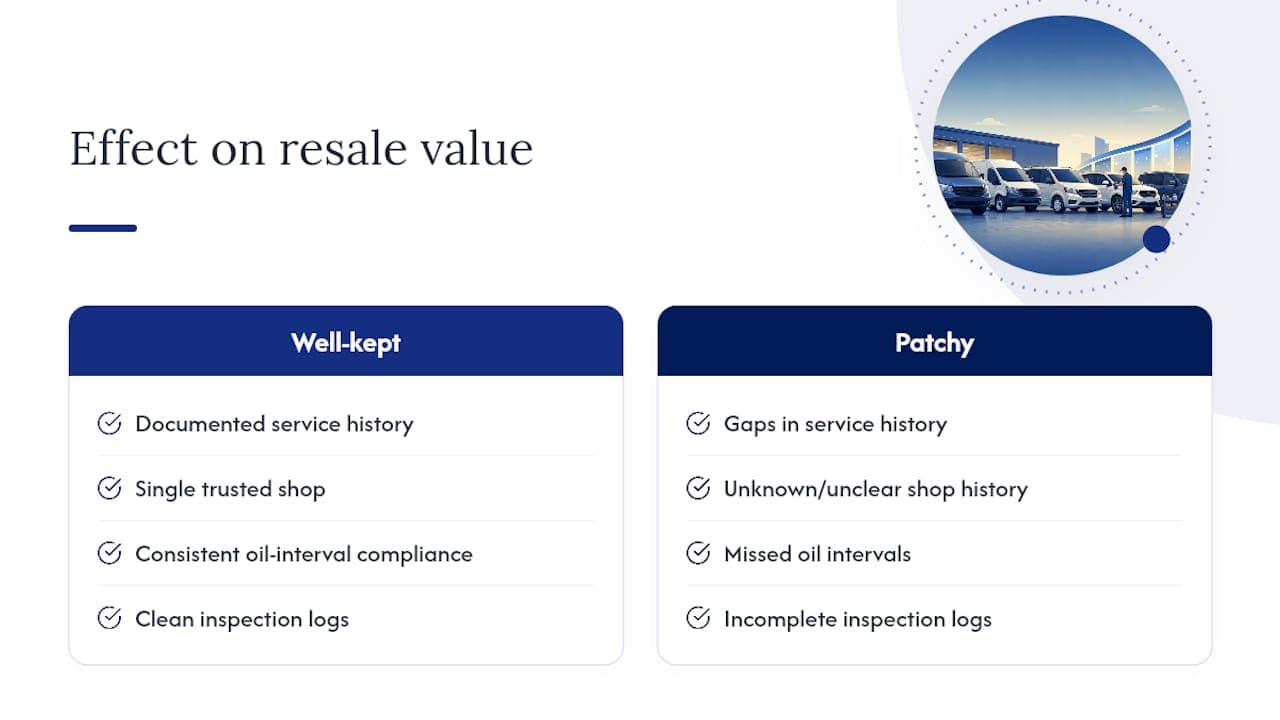
A well-maintained rental vehicle sells for more when it leaves your fleet, and the gap is often bigger than operators expect. Consumer Reports notes that keeping a vehicle with a single trusted shop builds a documented service history, and that history becomes a selling point at resale or auction, not just a maintenance record.
Buyers, whether they're wholesale auction bidders or retail used-car shoppers, discount price based on visible wear and unknown history. A rental vehicle with full-service records, consistent oil-interval compliance, and clean inspection logs commands a stronger price than an identical vehicle with gaps in its history, even when both cars are mechanically similar.
Tires and brakes matter disproportionately here. Uneven tire wear or a grinding brake sound during a test drive knocks real dollars off a resale offer, and both are entirely preventable with the turn-check and PM-tier discipline covered earlier. Interior condition matters too, but mechanical soundness is what a buyer's inspector actually tests before signing.
For fleets running vehicles for two or three years before rotating them out, the compounding value of consistent preventive maintenance can meaningfully offset the depreciation curve. A vehicle that's never missed a scheduled service and has no unresolved defect history simply holds more of its value than one that's been patched together reactively.
Who Should Own Preventive Maintenance at Your Company?
Preventive maintenance fails when it's everyone's job and no one's responsibility. Assign clear roles: counter staff and drivers own the turn check at every pickup and return, a maintenance coordinator owns the PM schedule and vendor relationships, and a shop lead or outsourced technician owns the actual service work and defect resolution.
Counter staff need training on exactly what to check and how to document it, not a vague instruction to "look the car over." A fifteen-minute training session covering the specific checklist items, how to take documentation photos, and when to flag a vehicle as unsafe to rent closes most of the gap between a good inspection and a rushed one.
The maintenance coordinator role matters most in small and mid-size fleets, since this is usually the person tracking PM triggers, managing parts reorder points, and holding vendors accountable to SLAs. Without a named owner, PM intervals slip quietly until a breakdown forces attention.
Technicians, whether in-house or vendor-based, need clear escalation paths for what counts as a safety-critical defect requiring immediate vehicle removal versus a routine issue that can wait for the next scheduled visit. Cross-training counter staff on basic defect recognition, not full mechanical diagnosis, but enough to know when something looks wrong, adds another layer of catch-it-early protection across the fleet.
Keeping Records That Actually Protect Your Business
Every inspection, service, and defect needs a timestamped digital record tied to the specific vehicle, not a folder of paper receipts that may or may not survive a filing cabinet reshuffle. Good documentation does two jobs: it protects you in a damage dispute or liability claim, and it builds the service history that pays off at resale.
Standardize what gets recorded for every maintenance event: date, odometer reading, service performed, technician or vendor name, parts used, and photo documentation where relevant. Store inspection photos alongside the written record so a claim dispute six months later has visual proof, not just a written note that a renter can contest.
Keep records centralized and searchable by vehicle, not scattered across separate systems for inspections, service history, and defect reports. A fleet management platform that ties all three together into one vehicle file turns record-keeping from an administrative chore into a searchable asset you can pull up in seconds when a question comes up.
Retention matters too. Keep full maintenance and inspection records for the life of the vehicle in your fleet, and carry them forward if the vehicle is sold, since a documented history is part of what a buyer is paying for.
Legal and Safety Rules That Shape Your Maintenance Program
Rental operators carry a higher duty of care than a private vehicle owner, since you're handing keys to someone who has no history with that specific car's quirks or condition. That duty translates into real legal exposure if a documented, preventable defect contributes to an accident.
Safety-related guidance from organizations like the Car Care Council covers the inspection and maintenance basics that support both roadworthiness and insurance defensibility, and following a documented inspection routine gives you a paper trail if a claim or lawsuit ever questions whether a vehicle was safe to rent.
State-level vehicle safety inspection requirements vary, and rental fleets need to track registration, emissions, and safety inspection deadlines for every vehicle separately from their internal PM schedule, since a lapsed state inspection can pull a vehicle out of legal rentable status even if it's mechanically sound. Insurance policies for rental fleets often carry maintenance-related conditions too, and a documented preventive maintenance history strengthens your position if an insurer ever questions a claim tied to vehicle condition.
The safest approach ties your internal PM tiers to whatever state and insurance requirements apply to your fleet's jurisdiction, and treats compliance deadlines with the same seriousness as your own service intervals.
A 30/60/90-Day Plan to Get Your Program Running
Ninety days is enough time to move from ad hoc maintenance to a working preventive program, if you resist the urge to build everything at once.
In the first 30 days, inventory every vehicle's current condition and service history, then enforce the daily turn check without exception. Pilot your PM tiers on your highest-utilization vehicles first, since that's where downtime costs the most and where you'll see results fastest.
By day 60, configure your fleet software to automate PM triggers, set parts reorder points based on real consumption data, and formalize written SLAs with your vendors instead of relying on informal relationships.
By day 90, establish your KPI baseline for rentable days, downtime per vehicle, and maintenance cost per vehicle. Scale staggered scheduling fleet-wide, and build a monthly review habit to catch drift before it becomes a pattern.
The program that works isn't the most sophisticated one. It's the one your team actually runs every single day without skipping steps.
— Dizzy
Let Nomora Run the Schedule You Just Built
Building the PM tiers, trigger rules, and inspection workflow covered above is the hard part. Enforcing them consistently, across every vehicle, every counter shift, every vendor relationship, is where most fleets quietly lose the plot within a few months. Some cloud rental platforms help enforce preventive maintenance programs with automated alerts, mobile inspections, real-time fleet visibility, and efficient onboarding processes.
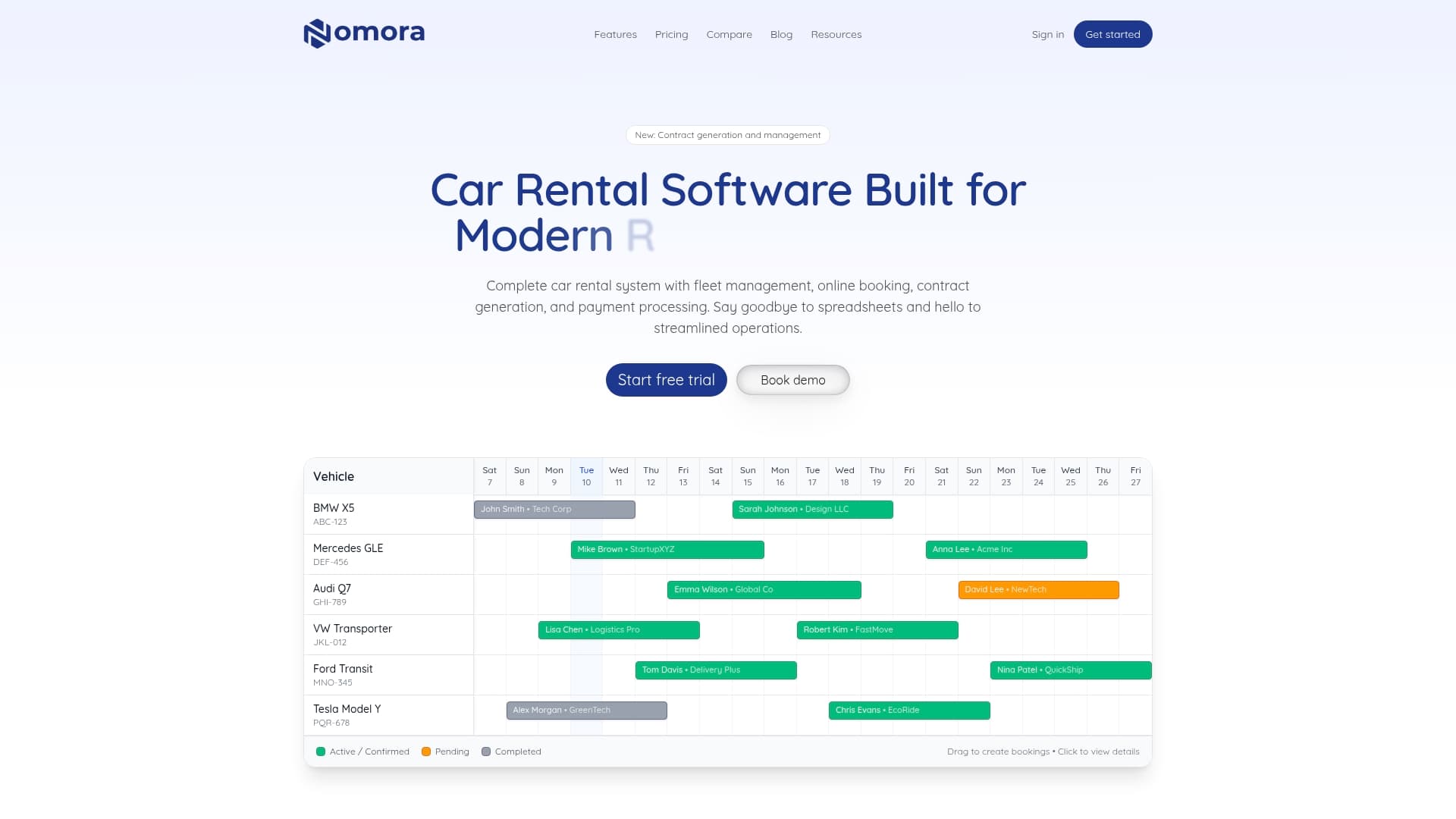
Here's how it maps to the steps in this guide:
- PM tiers and triggers become automated alerts tied to mileage, hours, and calendar dates
- Turn checks run through mobile inspection forms with photo capture built in
- Parts and vendor tracking stay tied to each vehicle's maintenance file
- Telematics data syncs in for the vehicles where predictive monitoring earns its cost
- Booking logic stays conflict-free, so a vehicle flagged for service never gets double-booked
Explore the full feature set for rental fleets or check how Nomora fits your specific rental business type, and request a demo to see your own PM schedule running inside the platform.
Sources
Recommended